“Accessible culture is a basic right.”
For two decades, Yael Josephsberg has turned a deeply personal journey into a national mission — building innovative models of inclusion, equality and accessible culture for families and communities.
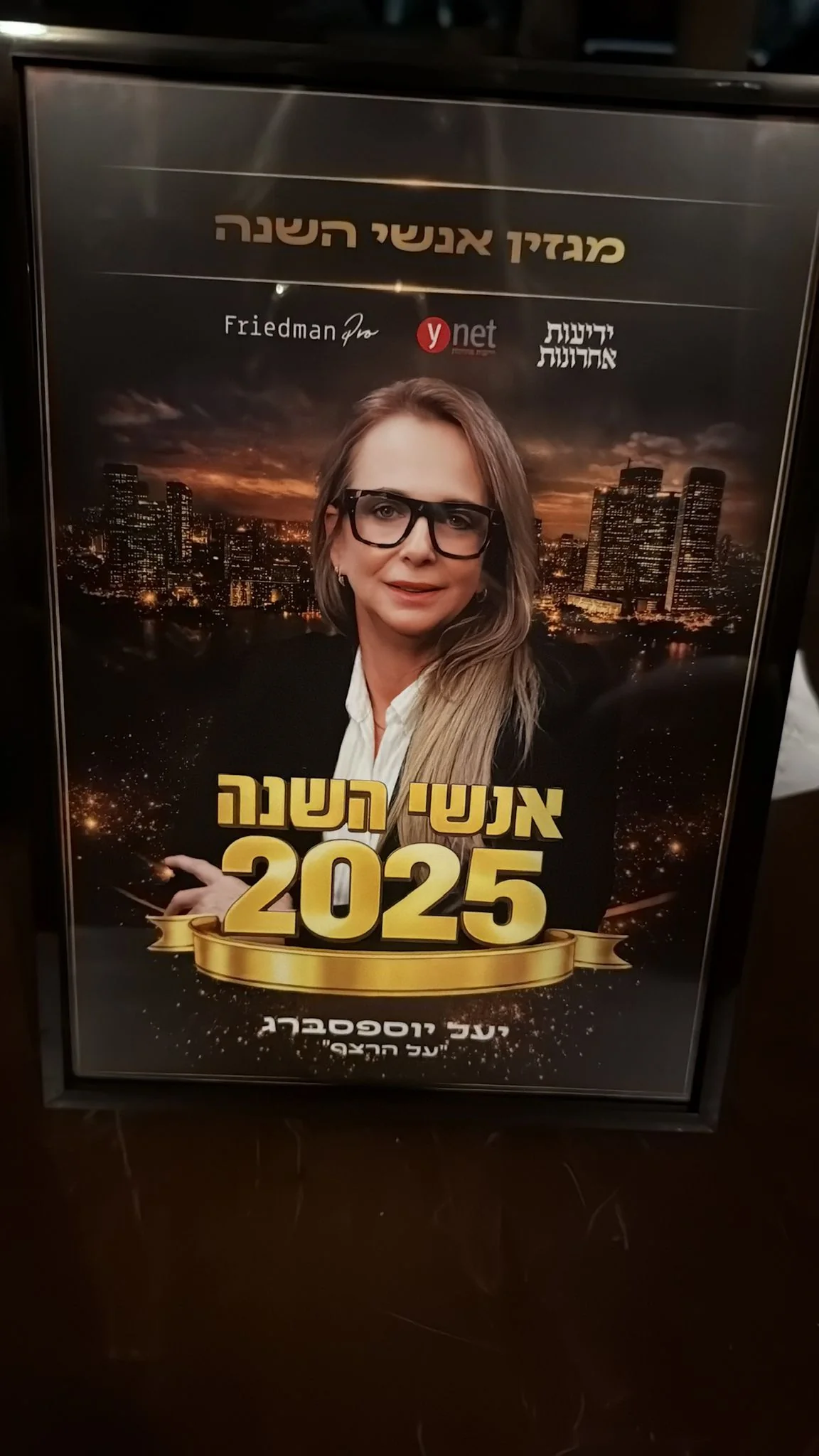
Twenty years ago, Yael Josephsberg's life changed in a single moment: her young son, Michael, was diagnosed on the autism spectrum. Out of that experience she became a leading figure guiding families of children on the spectrum, and through Al HaRetzef — her practice — she has for years provided parents with holistic, precise and compassionate support as they suddenly find themselves in an unfamiliar reality.
“The moment of diagnosis is life-shaking for families. My personal experience allows me to walk beside them with confidence and understanding.”
Her work crosses fields and continents — supporting families, helping them access their rights, building tailored frameworks, creating community belonging, and now making culture and leisure accessible.
“My approach is simple. Cultural events are meant for everyone — not separate ‘special’ audiences, but special and typical families together in one shared space. Free choice in culture is part of real equality.”
Her latest initiative — inclusive cultural performances for diverse audiences sharing one space — was born from a deep understanding of social barriers.
She recently initiated an inclusive family performance featuring the songs of the legendary Israeli band Kaveret. In the hall sat children on the spectrum, children with additional disabilities, and the general public — 2,400 audience members experiencing one shared, fully adapted show.
“When a teenager on the spectrum tells me, ‘This is the first time I feel that I belong,’ I know that inclusion is possible.”
Her son Michael danced and sang alongside children on the spectrum, children with disabilities, and children from the general audience. The same accessibility also supports post-trauma survivors and combat veterans, allowing them to attend cultural events comfortably.
The accessible glasses, developed through cross-sector social entrepreneurship, were recently featured in the Transparent Walls exhibition at the Israeli Knesset.
“These days we are developing special headphones that neutralise overwhelming sounds for people with auditory sensitivity and misophonia. The goal is a national model across Israel, with different types of performances.”
Al HaRetzef was born out of a deep need. “From my own story, I realised there was no single clear address for parents and no coordinating body. I wish I had had someone like myself on the day Michael was diagnosed,” says Josephsberg. Instead of staying in pain, she chose action — turning her personal difficulty into work for others.
For seven years she served as Chair of the Board of ALUT (the Israeli Autism Society), leading national initiatives in autism policy and strengthening collaboration between families, organisations and decision-makers.
Al HaRetzef provides holistic and analytical guidance with close personal presence — from intake meetings and building family plans, to choosing educational and therapy frameworks, and accompanying parents to committees, school systems, National Insurance meetings and public authorities.
“I hear what is said — and also what is not said.”
When a child is diagnosed with autism or a cognitive or emotional disability, the entire family is shaken. Some families grow stronger; others experience chaos that makes family life difficult. The model Josephsberg developed is based on systemic family-centred thinking.
“We work on the family unit, the couple, siblings, and a shared language. A special-needs child can break a family — or become a unifying force. We choose to build.”
How did Michael's diagnosis affect your family?
“Total acceptance from the first moment. There was confusion and a feeling of having no one to talk to — but I knew from the start I would lead, not be led. I would turn this experience into empowerment, not only for myself, but for many other families. And that is exactly what I do.”
Michael, diagnosed in childhood on the autism spectrum, is now 21 years old — a gifted musician studying at the Rimon School of Music in a personalised programme.
“I identified his strength and worked through it. Diversity is immense. We strengthen abilities and support weaknesses. Disability does not define a person. Thoughtful adaptation throughout the journey does.”
Her vision is broader still:
“I do not want society to include people on the spectrum into its space. The space belongs to everyone from the start. I want shared existence, where both sides accept one another. Only then can real equality exist.”
“For accessible culture and genuine belonging to become an ongoing reality — not isolated initiatives — we need economic backing from organisations, foundations and social investors. This is an investment in society as a whole.”
“Just as I refused to let Michael's diagnosis break me — failure here is not an option.”
“Every person deserves what benefits them from an equal place. Everyone has a space in society, without apology or being pushed aside. This is what I fight for — and will continue fighting for — alongside, and for, families of people with disabilities and challenges.”
Accessible culture is a basic right. The stage is open to everyone.