Al HaRetzef — the stage is open to everyone.
Yael Josephsberg on turning accessibility from a one-off event into a permanent responsibility of state and cultural institutions — and on the “invisible disabilities” that still keep too many people outside the room.
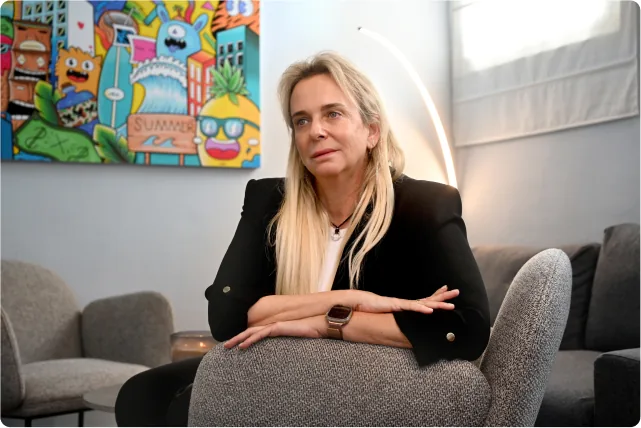
Culture, academia and employment are still closed to many people living with what Yael Josephsberg calls “invisible disabilities” — not for lack of goodwill, but for lack of structural funding. TheMarker’s Female Success series profiles Josephsberg, founder of Al HaRetzef, on her push to make accessibility a permanent obligation of state and cultural institutions rather than an occasional gesture.
“A person with special needs should have the right to choose.”
The premise running through the piece: accessibility is not charity, and it is not a separate “adapted” track that runs alongside the “normal” one. It is a basic right that has to be designed into cultural spaces, into higher education, and into the workplace — and it has to be funded as a permanent line item, not as an event-by-event grant.
Without that structural backing, Josephsberg argues, the people who most need access are the ones who quietly disappear from the audience, from the lecture hall, and from the candidate pool.
Josephsberg’s work — building on inclusive performances like the recent Kaveret for children event — treats accessibility as a model that should be reproducible, not improvised. The piece traces how she pushes the same logic into ventures across the Knesset, the Tower of David Museum, and a growing list of institutions: design the room so everyone can be in it, from the beginning.
“Cultural events are meant for everyone — not separate ‘special’ audiences. Special and typical families together, in one shared space.”
The headline of the original piece quotes a teen from one of Al HaRetzef’s inclusive events: “For the first time, I feel I belong.” For Josephsberg, that line is the whole point — the proof that designed-in accessibility doesn’t just “include” people, it produces a different experience for everyone in the room.
“Accessibility is not about helping a minority. It creates a better society for everyone.”
TheMarker’s full feature — in Hebrew — goes deeper into Yael’s journey, the specific projects underway, and the funding gap she’s asking state and cultural institutions to close.